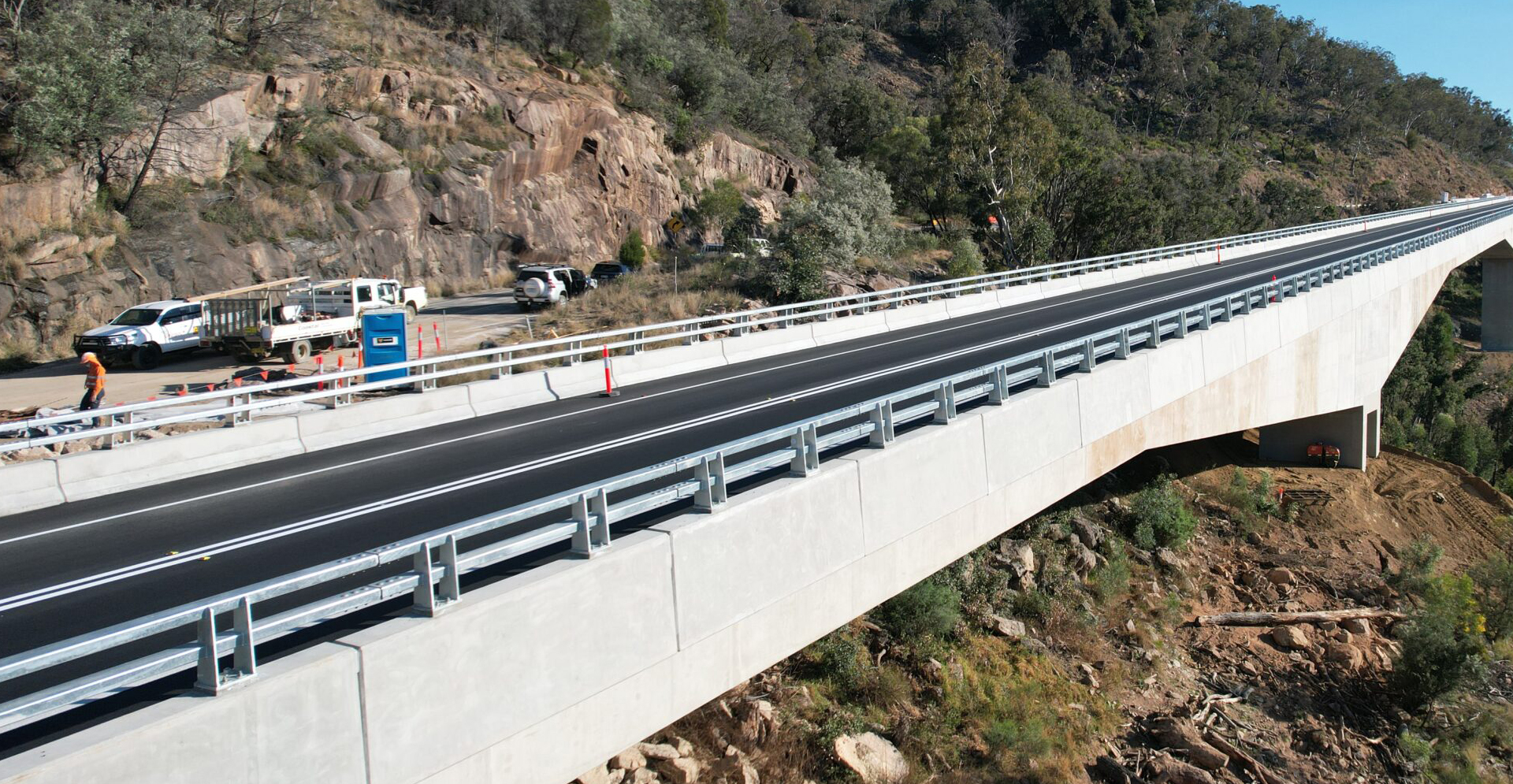
The Bolivia Hill Upgrade involved realigning the highway to remove the most dangerous curves, requiring construction of a 320m-long bridge across a large valley and retaining walls on the bridge approaches. During the Concept Design phase, Arcadis worked closely with Transport for NSW to develop several bridge options before the preferred option was selected. Arcadis designed a three-span cast in-situ concrete box girder bridge, with the 150m-long central span bridging the area of Bolivia Wattle within the valley below. The bridge was constructed using the balanced-cantilever method, which involves casting the bridge deck sequentially in short segments on either side of the two piers, maintaining the two cantilevers in balance, continues until the deck cantilevers extending from the piers reach each other and is completed with closure segments in the centre span. This method allowed a longer main span to be achieved which avoided impacts on the Bolivia Wattle and minimised the extent of temporary access tracks required in the steep terrain, reducing the cost and environmental impact of the project.
The bridge is founded with pad footings bearing on the granite bedrock and anchored down with ground anchors. The two piers consisting of twin reinforced concrete blades cast integrally into the superstructure, which varies in depth from 8m at the piers to 3.5m at mid-span.
Safety in construction and operation was paramount for the design. Our design removed working at heights requirements for bearing replacement by adopting integral pier connections, incorporated the existing highway into a safe parking area for maintenance workers and removed longitudinal drainage pipes from the underside of the superstructure to avoid the need for routine inspections from the bridge design. These key design details will continue to deliver safety benefits for Transport for NSW workers well into the future.